
About UCAR

The University Corporation for Atmospheric Research (UCAR) unites the Earth system science community, driving collaboration and innovation with real-world impact. With 131 member universities, including institutions across 43 states and D.C., UCAR advances research, education, and technology to benefit society.

The UCAR Community Programs (UCP) provide a suite of innovative resources, tools, and services to researchers, educators, and practitioners in the Earth system science community. 
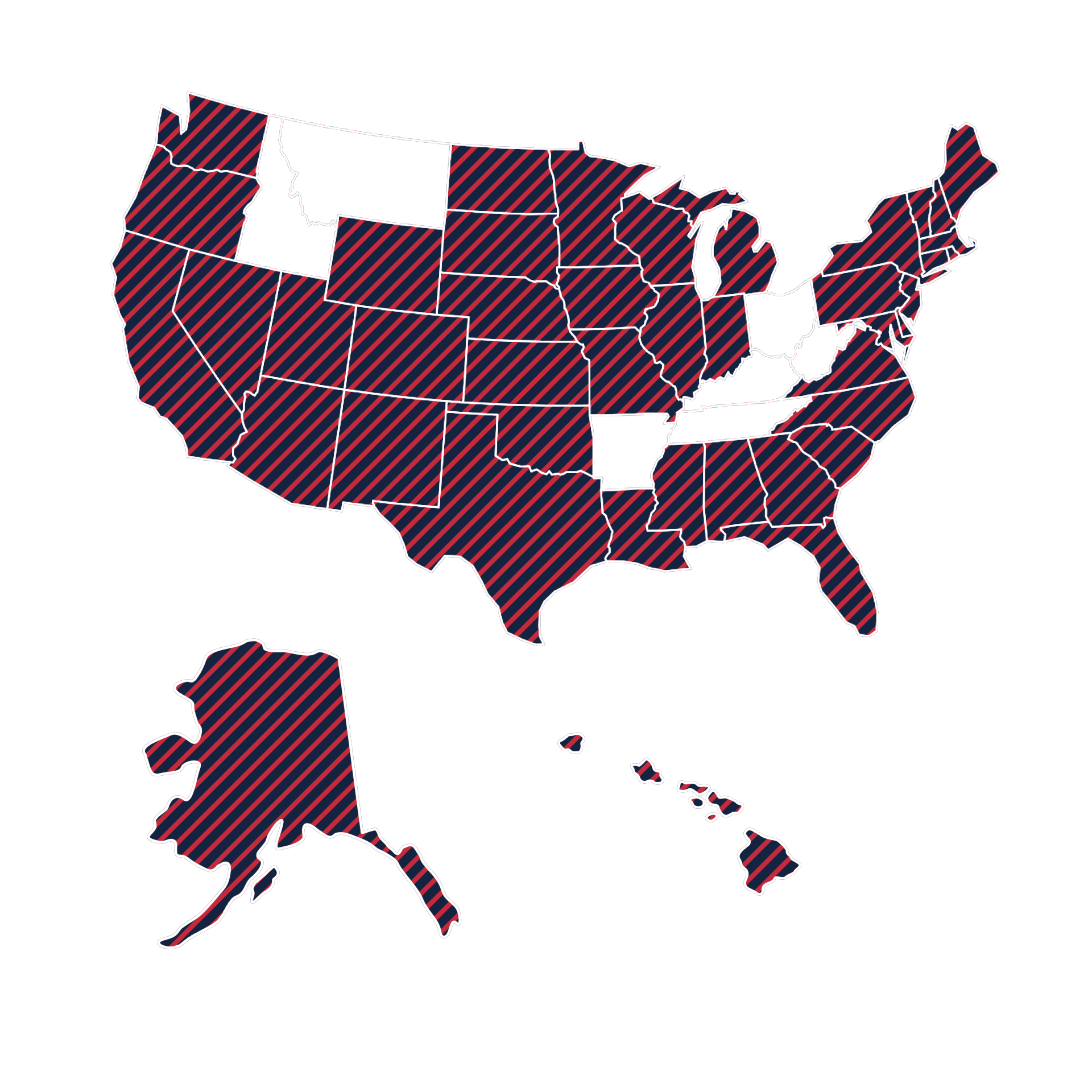
States with member universities

About NSF NCAR

Stylized image of two employees in an office.
  • NSF NCAR is a global leader in Earth system science, and its unique value lies in its capacity to treat the Earth as a single, integrated system, where all the different components — atmosphere, oceans, land, and Sun — are connected. 
  • The center empowers scientific discovery by providing tools for airborne and field observations, advanced atmospheric and Earth system models, high-performance computing, and workforce development programs. 
  • By studying the Earth as an interconnected system, NSF NCAR is working to provide solutions to some of the most difficult environmental challenges facing American communities today, including developing the nation’s capacity to make longer-term and more accurate forecasts of droughts, floods, heatwaves, and other phenomena that threaten agriculture, water supplies, and community infrastructure.
  • NSF NCAR’s labs and programs approach atmospheric research with different lenses that complement and build on one another, resulting in more useful and actionable science. 
  • NSF NCAR staff are experts across a wide range of disciplines, including meteorologists, hydrologists, solar physicists, atmospheric chemists, machine learning scientists, oceanographers, cryospheric scientists, engineers, educators, and others. This range of expertise yields a broad range of research outcomes with real-world impact. To see examples, visit the research section of this website. 
  • Having experts from across disciplines housed in the same center facilitates progress on today’s most pressing scientific challenges. These challenges are inherently complex and require expansive knowledge and varied ways of approaching problems and developing solutions. At NSF NCAR, experts from our seven interconnected labs are able to communicate, collaborate, and make progress with fewer barriers. 
  • This integrated approach to studying the Earth system allows NSF NCAR to offer unparalleled workforce development programs that build capacity for interdisciplinary, team-based science, opening up new frontiers in research.
  • Wildfires: Accurately assessing wildfire risk requires Earth system modelers, who understand land-atmosphere interactions, including how atmospheric conditions will affect soil moisture and vegetation, as well as satellite experts and machine learning scientists who apply AI techniques to update fuel inventories of what is available to burn on the ground. Meteorologists also collaborate with wildfire experts to simulate and predict hyper-local weather conditions around a fire after it starts, as well as the ways in which the fire itself can affect the weather. Atmospheric chemists work with research aviation experts to capture airborne observations of smoke plumes that improve their ability to model and predict the spread of smoke and its impacts on local communities downwind.
  • Hurricanes: Engineers are working with hurricane experts and data assimilation scientists to develop novel tools — including dropsondes and advanced airborne radar systems — to observe hurricanes and their environment days ahead of potential landfall. These observations improve landfall location and intensity prediction by providing a better understanding of ocean-atmosphere interactions. Hydrologists and meteorologists are collaborating to develop improved impact models that assess risk of coastal inundation, while social scientists are creating tools that help residents visualize how storm surge would impact their homes and studying what communications channels have the most influence on evacuation decisions.
  • Severe storms (tornadoes, hail, and damaging winds): Field campaigns such as VORTEX, which observed tornadoes, and ICECHIP, which observed hailstorms, bring together the engineers and technicians building and deploying novel instruments for observing severe weather with weather modelers seeking to better understand the fundamental processes of these damaging hazards. Artificial intelligence experts are also collaborating with traditional weather modelers to provide better forecasts of severe storms at longer lead times, executed with NSF NCAR’s supercomputing resources. Social scientists skilled in risk communication work to ensure that these improved forecasts are communicated in the most effective way to the communities most at risk.
  • The NSF NCAR ecosystem of scientific discovery is deeply integrated. Our models, observations, and computing expertise and resources are intertwined.
  • Our modelers rely on our supercomputer and other high-performance computing resources to run increasingly complex simulations and to store and analyze the vast amounts of resulting data. 
  • Designing and procuring the next-generation supercomputer requires a deep collaboration between our high-performance computing experts and our modelers to ensure that each successive supercomputer has the specifications required to continue to advance our understanding of the Earth system. 
  • Our models depend on observations to initialize and verify their simulations. In particular, observations of the phenomena we understand the least — which are often the target of our field campaigns — are essential to improving our ability to model and understand those phenomena accurately.
  • Our modeling can also help observationalists pinpoint which kinds of new measurements would be the most useful for improving weather and other Earth system predictions before new instruments are built and deployed.

Managed by UCAR, the U.S. National Science Foundation National Center for Atmospheric Research (NSF NCAR) is a global leader in Earth system science. NSF NCAR advances scientific breakthroughs by providing the research community with cutting-edge modeling, observational tools, computing resources, and workforce training. This frontier research delivers critical insights that protect lives, support the economy, and strengthen national security.

The U.S. National Science Foundation is an independent federal agency that supports science and engineering in all 50 states and U.S. territories. It was established in 1950 by Congress to promote the progress of science; advance national health, prosperity, and welfare; and secure the national defense.

Managed by UCAR, the U.S. National Science Foundation National Center for Atmospheric Research (NSF NCAR) is a global leader in Earth system science. NSF NCAR advances scientific breakthroughs by providing the research community with cutting-edge modeling, observational tools, and computing resources. This frontier research delivers critical insights that protect lives, support the economy, and strengthen national security.

The U.S. National Science Foundation is an independent federal agency that supports science and engineering in all 50 states and U.S. territories. It was established in 1950 by Congress to promote the progress of science; advance national health, prosperity, and welfare; and secure the national defense.

  • NSF NCAR is a global leader in Earth system science, and its unique value lies in its capacity to treat the Earth as a single, integrated system, where all the different components — atmosphere, oceans, land, and Sun — are connected.
  • The center empowers scientific discovery by providing tools for airborne and field observations, advanced atmospheric and Earth system models, and high-performance computing to understand and analyze interactions among the atmosphere, ocean, land, and Sun.
  • By studying the Earth as an interconnected system, NSF NCAR is working to provide solutions to some of the most difficult environmental challenges facing American communities today, including developing the nation’s capacity to make longer-term and more accurate forecasts of droughts, floods, heatwaves, and other phenomena that threaten agriculture, water supplies, and community infrastructure.
  • NSF NCAR’s labs and programs approach atmospheric research with different lenses that complement and build on one another, resulting in more useful and actionable science.
  • NSF NCAR staff are experts across a broad range of disciplines, including meteorologists, hydrologists, solar physicists, atmospheric chemists, machine learning scientists, oceanographers, cryospheric scientists, engineers, educators, and others. This range of expertise yields a broad range of research outcomes with real-world impact. To see examples, visit the research section of this website.
  • Having experts from across disciplines housed in the same center facilitates progress on today’s most pressing scientific challenges. These challenges are inherently complex and require expansive knowledge and varied ways of approaching problems and developing solutions. At NSF NCAR, experts from our seven interconnected labs are able to communicate, collaborate, and make progress with fewer barriers.
  • Wildfires: Accurately assessing wildfire risk requires Earth system modelers, who understand land-atmosphere interactions, including how atmospheric conditions will affect soil moisture and vegetation, as well as satellite experts and machine learning scientists who apply AI techniques to update fuel inventories of what is available to burn on the ground. Meteorologists also collaborate with wildfire experts to simulate and predict hyper-local weather conditions around a fire after it starts, as well as the ways in which the fire itself can affect the weather. Atmospheric chemists work with research aviation experts to capture airborne observations of smoke plumes that improve their ability to model and predict the spread of smoke and its impacts on local communities downwind.
  • Hurricanes: Engineers are working with hurricane experts and data assimilation scientists to develop novel tools — including dropsondes and advanced airborne radar systems — to observe hurricanes and their environment days ahead of potential landfall. These observations improve landfall location and intensity prediction by providing a better understanding of ocean-atmosphere interactions. Hydrologists and meteorologists are collaborating to develop improved impact models that assess risk of coastal inundation, while social scientists are creating tools that help residents visualize how storm surge would impact their homes and studying what communications channels have the most influence on evacuation decisions.
  • Severe storms (tornadoes, hail, and damaging winds): Field campaigns such as VORTEX, which observed tornadoes, and ICECHIP, which observed hailstorms, bring together the engineers and technicians building and deploying novel instruments for observing severe weather with weather modelers seeking to better understand the fundamental processes of these damaging hazards. Artificial intelligence experts are also collaborating with traditional weather modelers to provide better forecasts of severe storms at longer lead times, executed with NSF NCAR’s supercomputing resources. Social scientists skilled in risk communication work to ensure that these improved forecasts are communicated in the most effective way to the communities most at risk.
  • The NSF NCAR ecosystem of scientific discovery is deeply integrated. Our models, observations, and computing expertise and resources are intertwined.
  • Our modelers rely on our supercomputer and other high-performance computing resources to run increasingly complex simulations and to store and analyze the vast amounts of resulting data.
  • Designing and procuring the next-generation supercomputer requires a deep collaboration between our high-performance computing experts and our modelers to ensure that each successive supercomputer has the specifications required to continue to advance our understanding of the Earth system.
  • Our models depend on observations to initialize and verify their simulations. In particular, observations of the phenomena we understand the least — which are often the target of our field campaigns — are essential to improving our ability to model and understand those phenomena accurately.
  • Our modeling can also help observationalists pinpoint which kinds of new measurements would be the most useful for improving weather and other Earth system predictions before new instruments are built and deployed.

Singularly Positioned
to Make a Difference

UCAR, a nonprofit consortium, manages NSF NCAR, a federally funded research and development center (FFRDC) sponsored by the U.S. National Science Foundation. Unlike civil servants or tenured professors, UCAR and NSF NCAR experts operate at the nexus of the federal government, academia, and the private sector, bringing unique perspectives to their work.

Our organization boasts a rich legacy of technological innovation and collaboration with private enterprises to address complex challenges. We work with car manufacturers, electric utilities, commercial airlines, aerospace companies, the insurance industry, private weather companies, and other businesses to translate research into solutions. 

DICast®, developed at NSF NCAR, provides fine-tuned custom forecasts for user-defined locations and is utilized by companies operating across a wide range of industries, including those involved with road weather, agriculture, renewable energy, and pinpoint weather forecasting.

NSF NCAR built a wind energy forecasting system for Xcel Energy that, once implemented, began saving their customers about $10 million annually. We have since partnered with Xcel to implement a solar energy forecasting system that creates additional savings.

NSF NCAR has partnered with commercial airlines on a number of aviation projects, including in-flight turbulence warnings, as well as in-flight icing guidance. Information on the timing and effectiveness of using aircraft deicing fluids saved United Airlines $1 million during a single winter storm at O’Hare.

Our scientists work with the reinsurance industry to help them better understand and assess the future risks of extreme weather events, including landfalling tropical cyclones, heat waves, and wildfires.

Importantly, UCAR and NSF NCAR maintain a neutral stance on policy and political ideologies. Instead, we focus on providing research-backed insights that empower critical decision-making across public and private sectors. By doing so, we contribute to safeguarding lives, bolstering the economy, and enhancing national security.

It's not just research. It's an edge.

As global investments in supercomputing, satellites, and research surge, our country’s longstanding competitive edge is at risk.

For over 65 years, UCAR has united top research universities to advance Earth science and improve lives. Support UCAR and NSF NCAR to keep America where we belong: ahead of the competition.

As global investments in supercomputing, satellites, and research surge, our country’s longstanding competitive edge is at risk.

For over 65 years, UCAR has united top research universities to advance Earth science and improve lives. Support UCAR and NSF NCAR to keep America where we belong: ahead of the competition.